
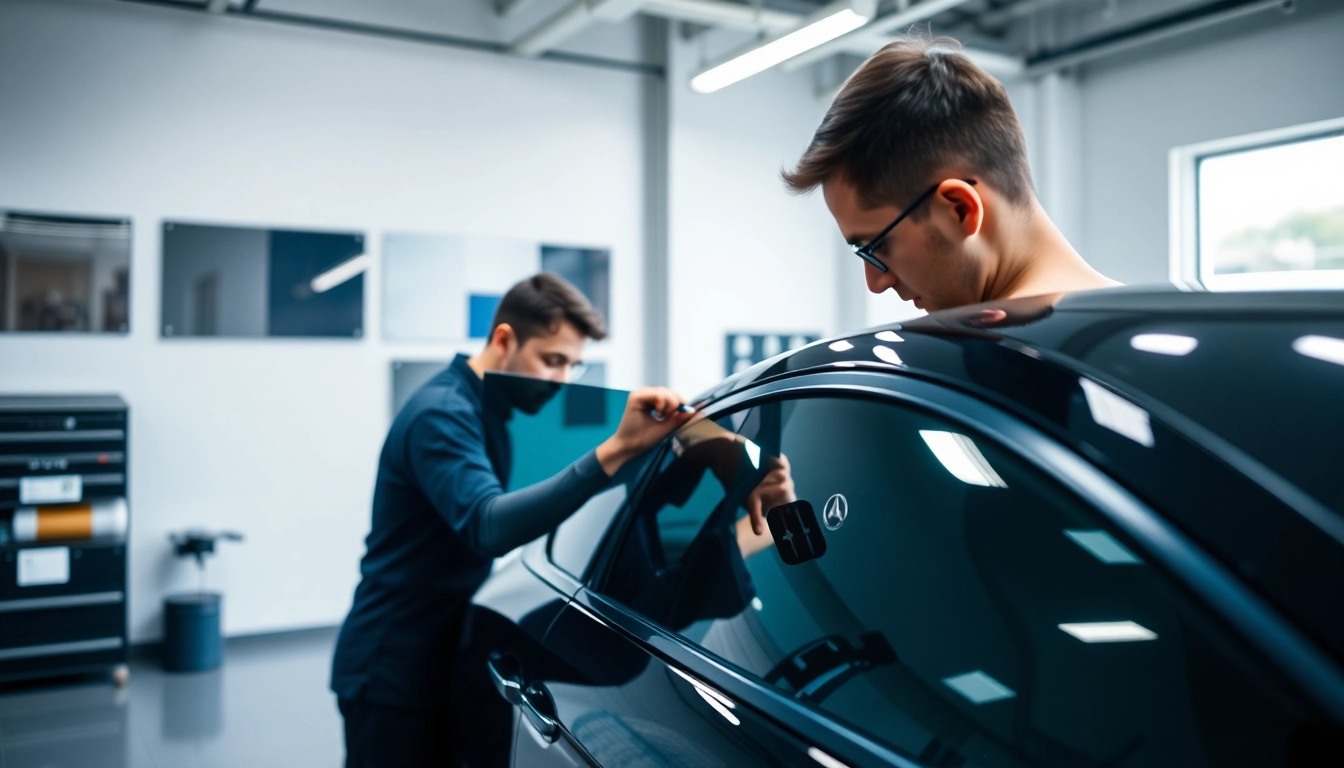
Understanding Auto Window Tint
What is Auto Window Tint?
Auto window tint refers to a thin film that can be applied to the windows of a vehicle. This film can significantly reduce the amount of sunlight that enters the car, providing various benefits ranging from aesthetic modifications to practical protection. Manufactured from materials such as polyester, window tint films come in various grades, shades, and types, each uniquely designed to cater to different needs, whether for heat reduction, UV protection, or privacy enhancement. For those searching for auto window tint near me, understanding the different choices can help you make an informed decision.
Benefits of Auto Window Tint
There are numerous reasons why vehicle owners choose to tint their windows. One of the primary benefits is heat reduction: tinted windows can block up to 99% of harmful UV rays while significantly cutting down on heat inside the car. This not only improves comfort but also protects the interior from sun damage. Additionally, window tint enhances privacy, allowing car occupants to enjoy a level of seclusion that untinted windows do not provide. Aesthetically, tinted windows give vehicles a sleek, polished look. Furthermore, tinted windows can offer protection against shattering in case of an accident, adding an extra layer of safety for the occupants.
Types of Window Tint Films
Window tint films fall into several categories, each reflecting different technological advancements and functionalities. Here are some of the most common types:
- Dye Films: These are the most affordable type and are mostly used for aesthetic purposes. They reduce glare and provide some UV protection, but their lifespan is generally shorter.
- Metallic Films: Composed of tiny metallic particles, these films efficiently block heat and reflect light but might interfere with electronic signals in the car.
- Carbon Films: These films offer a highly effective solution in terms of durability and heat rejection. They don’t fade over time and help preserve a car’s interior.
- Ceramic Films: The latest technology in window tinting, ceramic films provide excellent heat rejection, block 99% of UV rays, and do not interfere with mobile and GPS signals.
Choosing the Right Auto Window Tint
Factors to Consider
When selecting window tint, consider factors like local climate, vehicle type, and personal preference. The type of tint you choose can significantly impact the comfort level inside your car and its overall appearance. For example, if you live in a predominantly hot climate, opting for high-performance films like ceramic might be beneficial due to their superior heat rejection. Similarly, consider your state’s regulations on allowable tint levels as they vary by state and could impact your choice.
Regulations and Legal Compliance
Legal restrictions on the level of tint for vehicle windows are crucial to understand before installation. Many states enforce laws regarding how dark the tint can be and which windows can be tinted. Generally, the front windshield must have a lighter tint compared to rear windows. Before choosing a tint, verify local laws to ensure compliance; neglecting this can lead to fines and mandatory removal of the window film.
Choosing a Professional Installer
Selecting a professional installer is imperative to achieve optimal results with your window tint. Look for installers with good reviews and experienced technicians. The installation process requires precision and attention to detail for perfect finishing and longevity. Ask for references or view their past work to ensure they meet quality standards. Remember, a poorly installed window tint can peel, bubble, or distort over time.
Installation Process of Auto Window Tint
Preparing Your Vehicle
Preparation is key for a successful tint installation. Start by cleaning the windows thoroughly with glass cleaners and a microfiber cloth to remove dirt and debris. Ensure that the vehicle is parked in a clean, shaded area, such as a garage or inside a building, to avoid dust or particles settling on the windows during the installation process. Your installer should also confirm that the glass surface is free of scratches and imperfections prior to applying the film.
Step-by-Step Installation
The installation of window tint typically follows these steps:
- Measuring and Cutting: The installer will measure the glass surface and cut the film to precise dimensions.
- Applying the Solution: A solution will be applied to both the glass and the adhesive side of the film to allow better handling during placement.
- Film Placement: The film is positioned on the window, ensuring it aligns properly with the edges.
- Smoothing the Film: Air bubbles are smoothed out using a squeegee, ensuring a tight seal and adherence to the glass surface.
- Curing: The installer will let the film cure to ensure it binds effectively with the window, a process that may take between a few hours to several days, depending on environmental conditions.
Post-Installation Care
After installation, the film requires specific care to ensure its longevity. Avoid rolling down the windows for at least 48 hours to allow the film to adhere properly. Additionally, use only non-ammonia-based cleaners when cleaning the windows to prevent degradation of the tint. Regular maintenance will help preserve the appearance and functionality of the tint for years to come.
Common Questions About Auto Window Tint
How Long Does Window Tint Last?
Quality window tint can last anywhere from 5 to 15 years depending on the type of film used and how well it is maintained. Higher-grade films typically offer longer lifespans.
Can Window Tint Be Removed?
Yes, window tint can be removed, typically with the help of a professional. Proper removal ensures that there’s minimal damage to the underlying glass.
Is Window Tint Safe for My Vehicle?
When installed correctly using reputable products, window tint is safe for a vehicle, enhancing both aesthetics and comfort without affecting visibility.
Maximizing the Benefits of Auto Window Tint
Enhancing Privacy and Security
Tinted windows naturally increase privacy by reducing visibility into the vehicle from the outside. This added privacy can deter potential thieves who are less likely to target a car with tinted windows. Moreover, window tint provides a layer of protection by holding shattered glass together in case of accidents. This security benefit is crucial for keeping passengers safe.
Energy Efficiency Benefits
By blocking sunlight, window tinting can contribute to energy efficiency. Cars keep cooler in hot weather, thus reducing the need for air conditioning. This can save fuel and lower overall energy consumption, making window tinting a financially savvy choice in the long run.
Maintaining Your Window Tint
To enjoy the full benefits of your window tint, regular maintenance is essential. Clean the windows carefully with soft rags and appropriate cleaning solutions. Regular checks for bubbling, peeling, or fading will help identify any issues early. Ensure to follow the manufacturer’s recommendations for care to prolong the life of your window tint.
FAQs About Auto Window Tint
What is the best type of window tint?
Ceramic window tint is often recommended for its high performance in heat rejection and UV protection while not interfering with electronic signals.
Does window tint protect against UV rays?
Yes, most window tints can block up to 99% of harmful UV rays, protecting both the occupants and the interior of the vehicle from UV damage.
Can I tint my front windshield?
Yes, but regulations on the allowable tint shade vary by state. Always check local laws before applying tint to your front windshield.
Can window tint fade over time?
Yes, especially cheaper dye films. Premium films like ceramic or carbon tend to retain their color and performance longer without fading.
How much does it cost to tint windows?
The cost of window tinting can vary widely based on film type and vehicle size but expect to pay anywhere from $100 to $400 or more.
